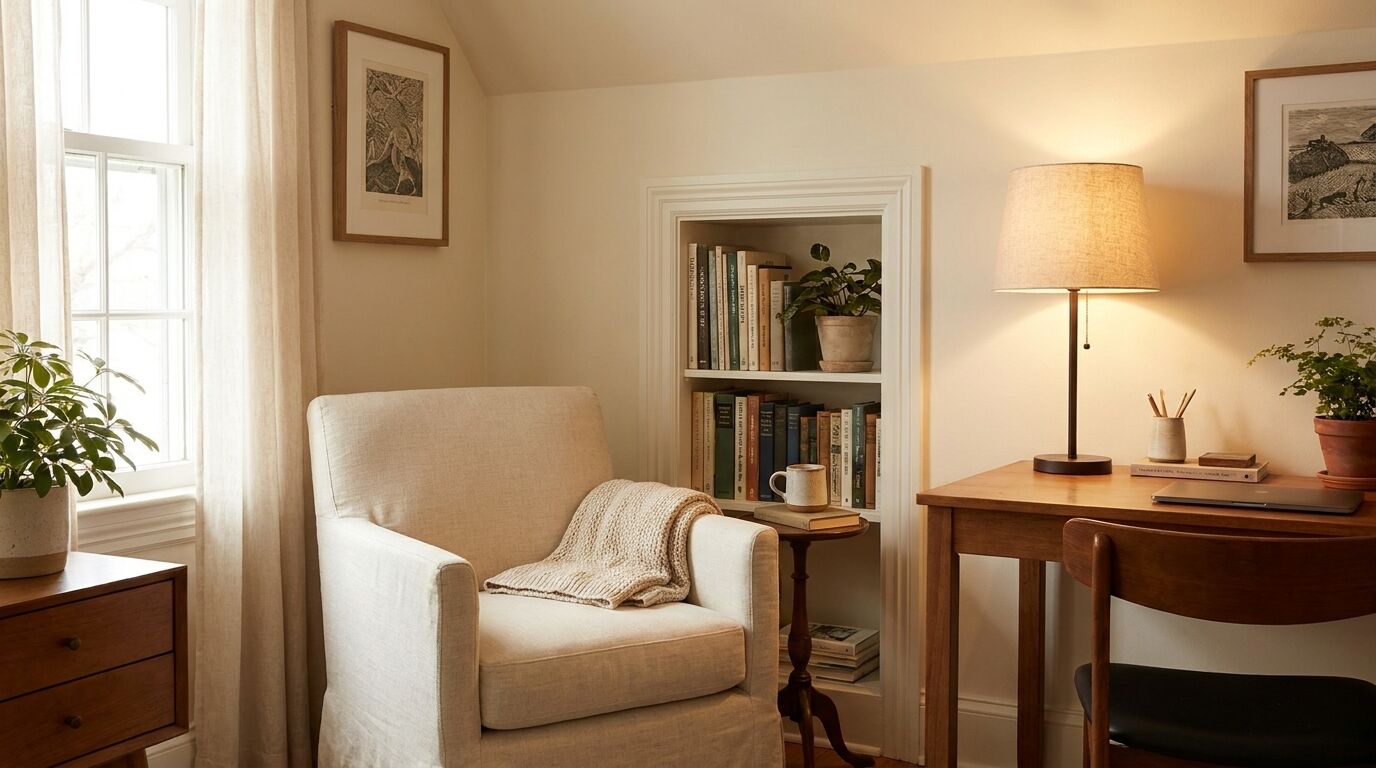
Rooms feel wrong either because the light is in the wrong place or because it is the wrong colour. This room-by-room guide covers lumens, colour temperature, layers and dimmers.
By Know Your Gadget4 min read
At a glance
Buy by lumens (brightness), not watts, and check the Kelvin figure for colour.
Official guidance puts living spaces at about 2700-3000K and a home office around 3500K.
Most rooms work better with two or three lighting layers on separate controls than with one ceiling fitting.
Check that a bulb is dimmable and compatible with your dimmer before you buy.
Rooms tend to feel wrong for one of two reasons. The light is in the wrong place, so you work in your own shadow, or it is the wrong colour, so a cosy lounge looks like a waiting room. Both are fixable without rewiring, and neither depends on buying more expensive bulbs. This guide starts with the three numbers worth reading, then goes room by room.
Three numbers on the packaging
Lumens measure brightness; watts measure the power a bulb uses. The US Department of Energy puts it plainly: lumens are a measure of the total amount of visible light, so buy by lumens. Natural Resources Canada agrees, with a 9-watt LED giving about the same light as a 60-watt incandescent, around 800 lumens.
Matching old bulbs to LED light output, from US Department of Energy and Natural Resources Canada tables
Light output
Old incandescent
ENERGY STAR LED (typical range)
450 lumens
40 W
4.5 to 7 W
800 lumens
60 W
5.9 to 10.5 W
1,100 lumens
75 W
9.5 to 14 W
1,600 lumens
100 W
10.5 to 18 W
2,600 lumens
150 W
Not given in the sources
Kelvin (K) describes the colour of the white light. Lower figures are warmer and yellower, and higher ones cooler and bluer. The Department of Energy lists 2,700 K as warm, 3,000 K as soft, 3,500 K as neutral and 4,100 K as cool, the last usually found in offices and classrooms. Natural Resources Canada adds that residential LEDs range from about 2,000 K to 6,500 K.
CRI, the colour rendering index, runs from 0 to 100 and says how faithfully a light shows colours. The Department of Energy notes that ENERGY STAR-qualified bulbs must score 80 or more. That programme is a North American one, so in the UK or Australia read the CRI figure on the packaging directly rather than relying on a label.
Think in layers, not fittings
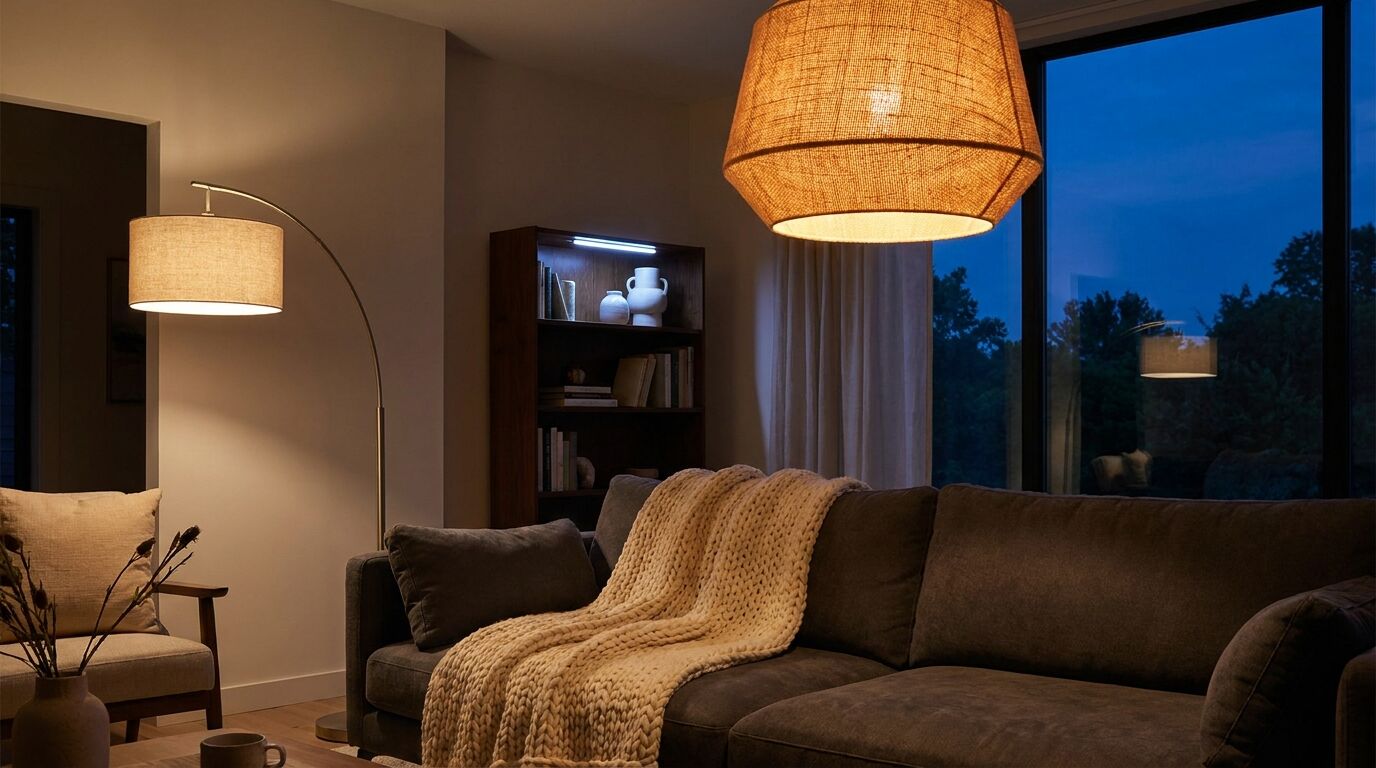
Natural Resources Canada’s home lighting guide describes four layers, each ideally on its own control. Ambient light is the soft general fill that reduces shadows. Task light is extra brightness for reading, cooking or working. Accent light highlights art, plants or a textured wall. Decorative fittings, such as sconces or a chandelier, are chosen mainly for how they look.
A living room lit in layers: ceiling light, a table lamp and a low accent source.
A single ceiling light gives you only the ambient layer, and the brightness you choose to read by is the brightness you then sit in all evening. Separating the layers is cheaper than it sounds: a lamp for reading, a small light on a shelf and a dimmer on the ceiling fitting can all be changed without touching the wiring beyond the dimmer switch itself. Any switch or wiring change should be done by a qualified electrician.
Room by room
Starting points by room. Living-space and home-office temperatures and the kitchen task note come from NRCan; for other rooms we apply the general living-space range as a suggestion. Layout advice is from NRCan’s lighting guide
Room
Layers to aim for
Colour temperature guide
Practical note
Hallway and entry
Ambient plus a feature light by the door
Warm (about 2700-3000 K)
Downlights alone cast shadows; switches at both ends help
Living room
Lamps, indirect ambient light, accent
2700-3000 K
Control glare where you read; dim for TV
Kitchen
General light plus task light under wall cabinets
Cooler light suits task areas, per NRCan
Separate controls rather than one switch
Dining area
Dimmed overhead plus wall or side lighting
Warm, 2700-3000 K
Do not rely on one pendant at full brightness
Bedroom
Soft ambient plus glare-controlled reading lights
Warm, 2700-3000 K
Dimmable bedside lights on separate switches
Bathroom
Light at the mirror from the sides, plus general light
No figure in sources; choose a high CRI
Keep the fan on a separate switch; check fittings are rated for damp areas
Home office
Even, low-glare general light plus a task lamp
About 3500 K
Place the screen to avoid reflections
Stairs
Even light with no dark steps
Warm (our suggestion)
Switches at top and bottom; low step lights
None of the agencies we read gives a lumen target for each room, and any such figure on a product page depends on room size, wall colour and fittings, so we have not invented one. A practical method is to count your current fittings, look up what each bulb produces on its packaging, and adjust from there. If a room feels dim, add a layer before you buy a higher-lumen bulb for the same fitting.
Dimmers, smart bulbs and timers
Dimming is the cheapest way to make one fitting serve several moods, but not every LED dims. Check the bulb’s packaging for dimmable compatibility, and if your existing dimmer was installed for older bulbs, it may need to be replaced with one designed for LEDs. Natural Resources Canada does not cover how to test compatibility, so rely on the manufacturer’s lists for both bulb and dimmer.
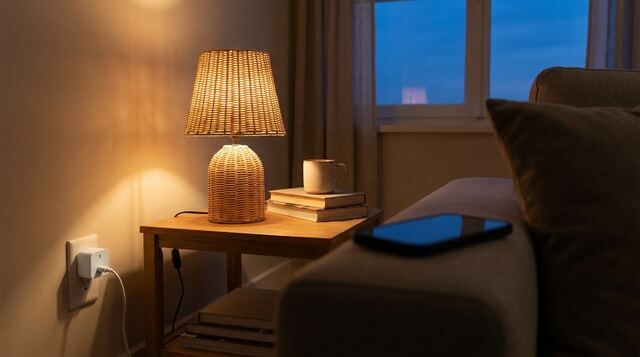
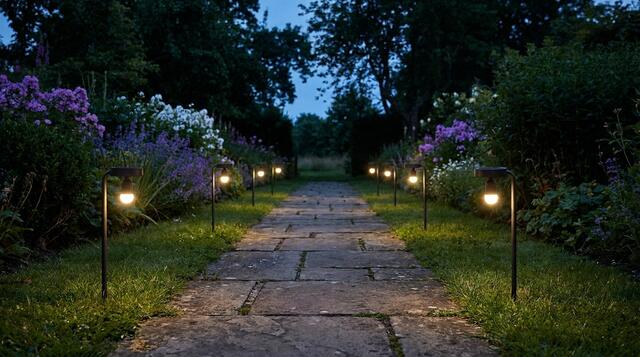
Smart bulbs connected to your wireless network can be dimmed, or have their colour changed, from a phone, tablet or smart assistant, says NRCan. Plain lamps can be scheduled using a smart plug, though a plug only switches power on and off and cannot dim. Outdoors, NRCan mentions motion-sensing lights that switch on only when someone is nearby; for garden paths, see our guide to solar outdoor lighting.
A short sequence for a first change
Pick the one room where you spend most evenings and note what lights it now.
Check the lumen and Kelvin figures on the bulbs in place, and match the colour temperature when you replace them.
Add one lamp for the missing layer: reading in the living room, or a task light in the kitchen.
Confirm any dimmable bulb is compatible with its dimmer.
Live with it for a week before changing anything else.
Storage areas deserve a layer too. In pantries and cupboards, shelf lighting is one of the simplest ways to see what you own.
How we research. Based on manufacturer documentation and the sources listed below. Know Your Gadget did not test products for this article. See our editorial policy.
A smart plug adds remote and scheduled switching to anything with an ordinary plug. It is a handy low-effort upgrade, as long as you match it to the right appliance and set it up with security in mind.
A solar garden light is a small panel, a small battery and an LED. Most disappointments come from how those three suit the season and the spot, not from any one part.
Connected canisters, fridge sensors and expiry-tracking apps promise tidier shelves. For each one there is a cheaper, quieter method. Here is when the gadget is worth having.