Kitchen & Lifestyle
Air Fryers Explained: Size, Features and Everyday Use
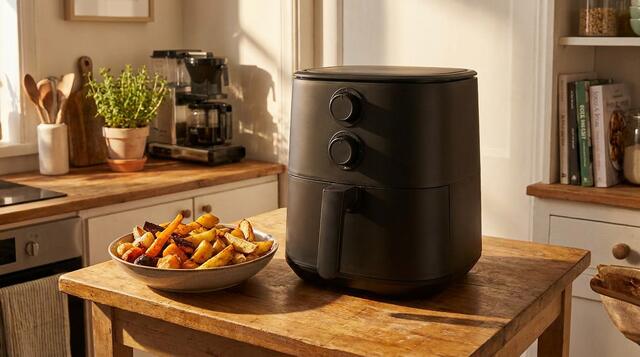
An air fryer is a small, fast fan oven with a basket. Here is what that means for capacity, controls, cleaning, safety and the claims that tend to follow the appliance around.

Connected canisters, fridge sensors and expiry-tracking apps promise tidier shelves. For each one there is a cheaper, quieter method. Here is when the gadget is worth having.
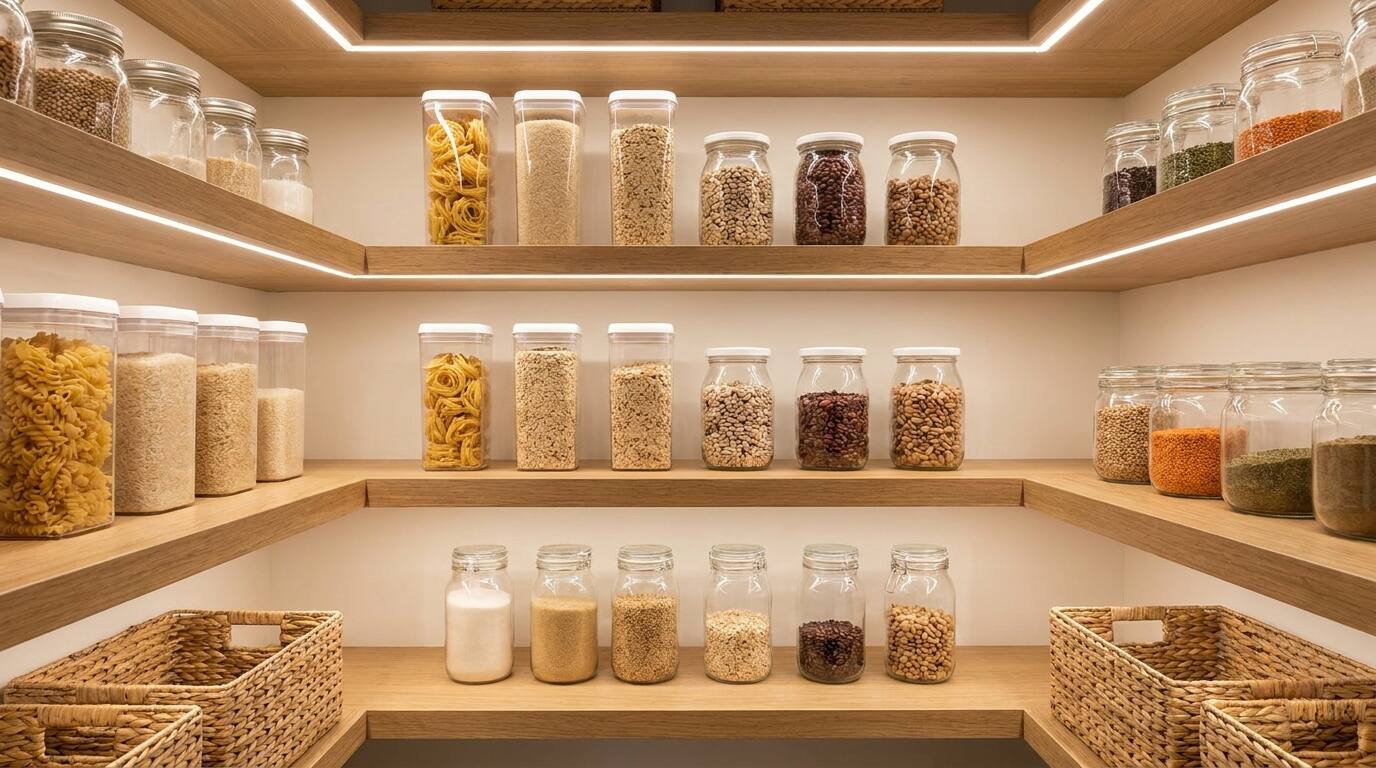
Does your kitchen need a better container, or a better habit? Before buying anything with a battery or a companion app, spend a week writing down what actually goes wrong. Food that gets forgotten at the back of the fridge is a visibility problem. Flour that attracts pests is a seal problem. Leftovers that go off before you eat them are a timing problem. Each calls for something different.
This guide sets out the gadget version of each fix next to a low-tech alternative, and says plainly where the gadget wins and where it only adds another thing to charge.
Storage gadgets are only useful if they support the basics. Health Canada advises setting the refrigerator at 4°C or lower and the freezer at -18°C or lower, and keeping food out of the 4°C to 60°C range where bacteria grow quickly. Food Standards Australia New Zealand gives 5°C or colder for perishable food. The two figures are not identical, so use your own national guidance, and note that either is easiest to verify with a thermometer rather than the fridge’s own dial.
The same agencies agree on containers and timing. Raw meat, poultry and fish go in sealed containers or bags on the bottom shelf so juices cannot drip. FSANZ advises cooling leftovers quickly, for example in shallow containers in the fridge, and eating perishable leftovers within a few days. Health Canada’s chart gives 3 to 4 days in the fridge for cooked meat, stews and egg or vegetable dishes, and 2 to 3 days for soups.
| Problem | Smart option | Simple alternative | Verdict |
|---|---|---|---|
| Is the fridge cold enough? | Wi-Fi fridge sensor with alerts | Stand-alone fridge thermometer | Sensor helps if you travel or have an older fridge; otherwise the thermometer does the job |
| Forgotten leftovers | App that logs what you put in | Masking tape and a marker on the lid | Tape is faster for most households; an app suits people who already use shopping apps |
| Pantry staples going stale | Vacuum-seal canisters | Airtight jars or containers | A good seal matters more than a pump |
| Not knowing what is in the freezer | Inventory app with barcode scan | A written list on the freezer door | List wins unless several people share the freezer |
| Wasted fresh produce | Smart crisper box | Moving produce to a visible shelf | Visibility is usually the real fix |
| Counter clutter | Motorised or app-controlled organisers | Fixed shelf risers and drawer dividers | Fixed fittings have nothing to break |
A fridge sensor with a phone alert earns its place if the fridge sits in a garage, a holiday property or any kitchen where a door could be left ajar overnight. Look at how the sensor is powered, how far its signal reaches, and whether alerts work without a paid subscription. If you only want to check the fridge occasionally, a plain thermometer placed on a middle shelf is enough.
In a house with several adults, a shared shopping list or inventory can reduce double-buying. It only works if everybody updates it, and a paper list on the fridge can do the same for nothing.
Anyone who buys in bulk and keeps a freezer full might use a spreadsheet or an app to track what is going to run out. Health Canada’s guidance says freezer times vary by food, for instance 2 to 3 months for cooked meat dishes and 4 to 6 months for cooked poultry and fish, so a tracker that reminds you of dates can be practical.
For dry goods, the Academy of Nutrition and Dietetics’ consumer guidance (published through Eatright.org) recommends keeping the cupboard clean, dry and dark, away from heat-producing appliances, and moving opened rice or pasta into airtight containers to keep out insects and stop food absorbing odours and moisture. Put older items at the front so they are used first. That is an entire storage system, and it needs nothing electric.
Labelling is where an app can help or complicate. Health Canada explains that a best before date indicates freshness and potential shelf life, not safety, and applies to unopened food; once a package is opened, the shelf life can change. Foods with a shelf life of more than 90 days do not need a best before date at all. So decanting into a jar and keeping only the date you opened it is often more meaningful than copying the original date. A strip of tape or a chalk label does that equally well.
Lighting is another overlooked storage tool: a dim pantry hides what is in it. A cupboard or shelf strip is a small change that makes everything more visible, and the room-by-room advice in Choosing Better Lighting for Different Rooms covers what to look for.
Is this storage gadget solving a real problem?
If the answer to the first question is no, a thermometer, a roll of tape and a set of airtight jars will cover most households. More on matching appliances to space is in Small Kitchen Appliances Worth Understanding Before You Buy, and the Kitchen & Lifestyle section collects the rest of this series.
How we research. Based on manufacturer documentation and the sources listed below. Know Your Gadget did not test products for this article. See our editorial policy.
Kitchen & Lifestyle
An air fryer is a small, fast fan oven with a basket. Here is what that means for capacity, controls, cleaning, safety and the claims that tend to follow the appliance around.

Home Gadgets
Rooms feel wrong either because the light is in the wrong place or because it is the wrong colour. This room-by-room guide covers lumens, colour temperature, layers and dimmers.

Home Gadgets
A smart plug adds remote and scheduled switching to anything with an ordinary plug. It is a handy low-effort upgrade, as long as you match it to the right appliance and set it up with security in mind.