
Everyday Tech
Choosing Headphones for Everyday Use
Fit, noise control and battery matter more in daily life than most spec-sheet lines. A guide to choosing by where you wear them, with a plain-English look at codecs and safe listening.

Loudness is easy to print on a box and hard to compare. Water and dust ratings, battery, Bluetooth codecs and where you put the speaker usually shape the experience more.
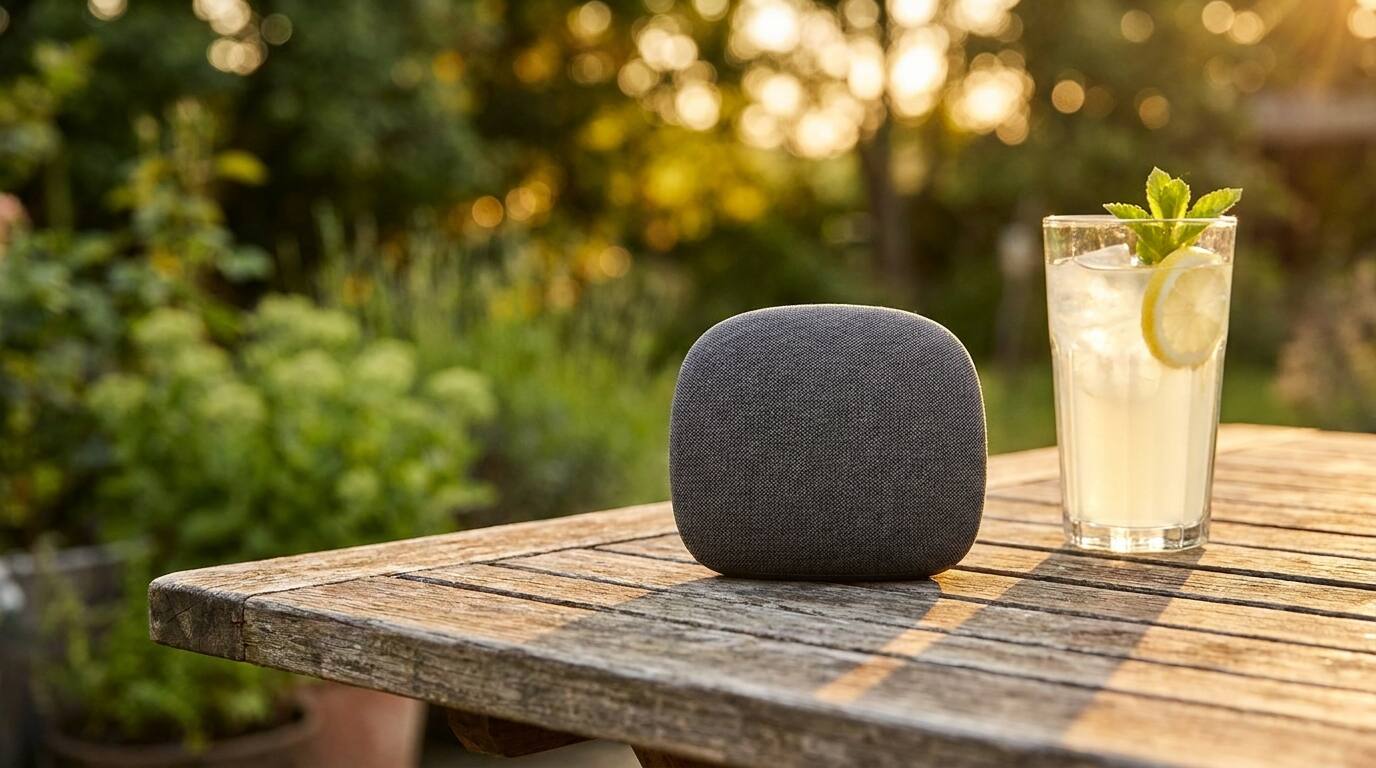
A loudness figure says little without knowing how it was measured, and outdoors a speaker has no walls to reinforce its sound. The details that decide whether a portable speaker suits a garden, a beach bag or a kitchen shelf are usually quieter: how it handles water, how long it runs, what it connects with, and where you stand it.
The IP code comes from the international standard IEC 60529, titled Degrees of protection provided by enclosures. It has two digits. The first, from 0 to 6, covers solid objects and dust; the second, from 0 to 9, covers water. A letter X replaces a digit when that aspect was not rated, so IPX7 says nothing at all about dust.
| Code | What it describes | Worth remembering |
|---|---|---|
| IPX4 | Protected against splashed water | Suits rain showers, not submersion, and says nothing about dust |
| IPX7 | Protected against the effects of temporary immersion | Rated for temporary immersion; dust is unrated, so check the maker's stated depth and time |
| IP67 | Dust tight (6) plus the same temporary-immersion rating (7) | Dust and temporary immersion are both rated |
| IP68 | Dust tight plus protection against continuous immersion | The conditions are set by the maker, so read the stated figures |
Quoted playtime is a single number for what is really a range. How long a speaker runs depends on how loud it is played, so expect fewer hours at high volume than a headline figure suggests. If a speaker states playtime at a particular volume or setting, that is more useful than one without a condition.
Charging deserves the same attention. Many speakers charge from USB-C, and USB Power Delivery, as the USB Implementers Forum describes it, lets a charger and device negotiate for the power the device needs, so a small speaker simply takes less than a large charger could provide. What matters in practice is the stated input power and whether a full charge takes minutes or hours. If you travel with a speaker, the sums in our power bank explainer help you judge how many top-ups a spare battery pack could give.
Your phone compresses audio with a codec and the speaker must understand the same one, so the pair agree on a format they both support. The Bluetooth SIG states that LC3, the codec in LE Audio, scored higher than SBC in a listening comparison while using 160 kbps against SBC’s 345 kbps. Both ends must support the newer approach, so a speaker advertising LE Audio only benefits from it with a phone that offers it too.
Better codecs improve the quality of the signal sent to the speaker. They do not change the size of the speaker’s drivers or its enclosure, which set a limit on bass and clarity that no codec can remove.
A second feature to look for is Auracast, which the SIG presents as a way to share audio with several receivers rather than pairing one-to-one. For speakers, it points to a future where a single source feeds several speakers or a venue’s audio. The SIG says existing devices might add support through retrofit solutions, so ask the maker rather than assume. Pairing two identical speakers for stereo is usually a maker-specific feature, not a Bluetooth guarantee, so check it is listed.
Speakers behave differently in rooms and in open air. These adjustments cost nothing:
Quick checks before buying
Speakers are one end of the wireless chain, headphones the other; if the same codec questions apply to your earbuds, choosing headphones for everyday use goes further. For battery-powered gear beyond the pocket, see Outdoor and Travel.
How we research. Based on manufacturer documentation and the sources listed below. Know Your Gadget did not test products for this article. See our editorial policy.
Everyday Tech
Fit, noise control and battery matter more in daily life than most spec-sheet lines. A guide to choosing by where you wear them, with a plain-English look at codecs and safe listening.
Outdoor & Travel
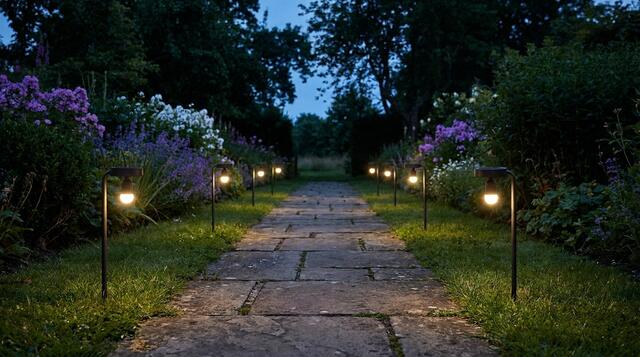
A solar garden light is a small panel, a small battery and an LED. Most disappointments come from how those three suit the season and the spot, not from any one part.
Outdoor & Travel
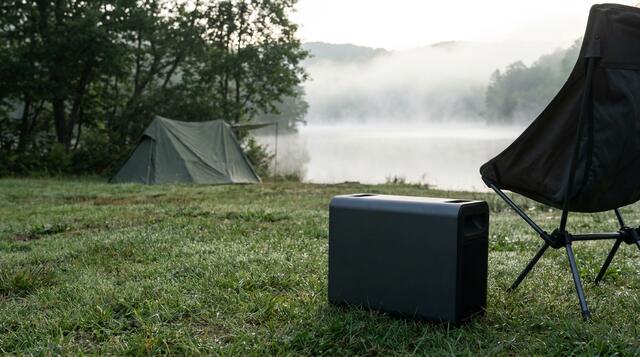
Watt-hours, watts, battery chemistry and what a campsite load really needs, worked through with simple arithmetic you can repeat for your own gear.