Kitchen & Lifestyle
Air Fryers Explained: Size, Features and Everyday Use
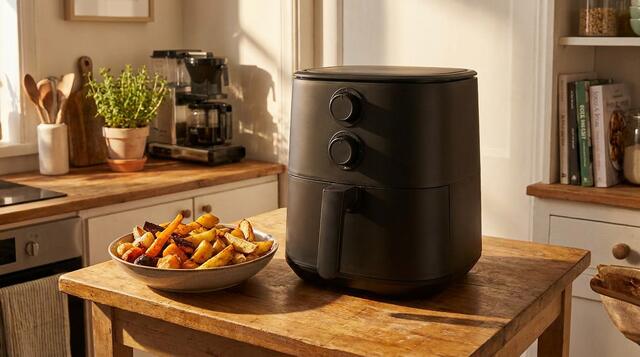
An air fryer is a small, fast fan oven with a basket. Here is what that means for capacity, controls, cleaning, safety and the claims that tend to follow the appliance around.

Seven questions that sort the appliances you will use weekly from the ones that end up in a cupboard, plus a matrix for comparing worktop footprint, power and cleaning.
Those seven questions do most of the work. The rest of this guide takes them in turn, then ends with a matrix you can adapt. It does not name or rank products; it explains the thinking behind a purchase so that you can apply it to whatever you are considering.
Some appliances substitute for something you already own, such as a toaster oven standing in for a full oven on small jobs. Others create a new habit: a milk frother, a rice cooker, a sandwich press. Be honest about which is which. A device that replaces a task costs you less in attention, while one that adds a task has to be pleasant enough to use that you will keep doing it.
Write down the last three occasions you wished you had the thing. If you cannot, the true frequency may be low. A weekly appliance deserves worktop space; a monthly one needs a cupboard that is easy to reach; an annual one is probably better borrowed or skipped. The same logic applies to features: a setting you will use once is not a reason to pay for a model with more of them.
Measure the worktop gap, the height under wall cupboards and the depth of the shelf you intend to store it on. Appliances that vent steam or hot air need clear space above and behind, and those with lids that open upward need headroom. Many manuals specify this clearance; the numbers differ between models and are worth checking before you decide on a spot. A cable that has to snake across the worktop is also a hint that the position is wrong.
Heating appliances draw far more electricity than anything else on a typical worktop. Electrical Safety First’s guide to appliance ratings, which is UK-based and described as indicative, lists kettles at typically 2,200 to 3,000 watts and a single oven at around 3,000 watts, against a household washing machine or dishwasher at roughly 2,200 watts. The figures are a reminder to check the actual label, which gives watts or amps for your specific model and your local supply.
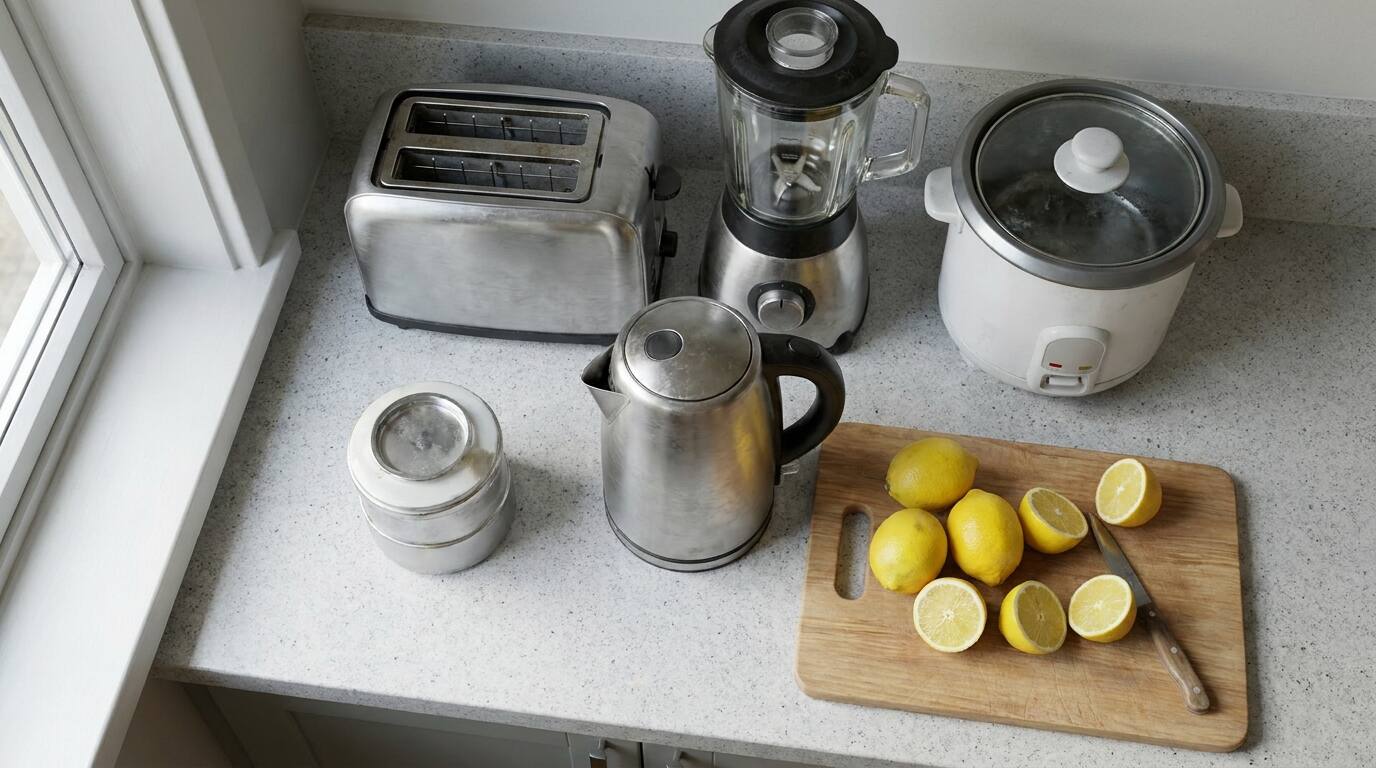
The same page warns that extension leads can cause overloads if they are daisy-chained. In practice that means plugging a toaster, a kettle and an air fryer into a single multi-way adapter is the wrong way round; give high-power appliances their own wall socket, and read the manual if it says otherwise.
Count the parts that touch food, and ask which come apart without tools. A blender jug with a fixed blade is easier to rinse than one whose seals need prising out. A grill plate that is dishwasher-safe is less work than one that must be hand-washed. The manual should say which components can be immersed; Electrical Safety First’s air fryer guidance, for example, advises letting the appliance cool for at least 30 minutes and immersing only parts the manufacturer says can be immersed.
Hygiene practices matter too. Health Canada advises changing dishcloths daily and avoiding sponges, which are harder to keep clean, and sanitising surfaces and utensils before and after food preparation. That is a good test for any gadget: can you get a cloth into every place food lands?
Appliances that heat water leave limescale. De’Longhi’s support guidance says descaling frequency depends mainly on how hard your water is, with a general guideline of every 200 uses for a pump espresso machine, and that some models can be programmed to your hardness. Other manufacturers give calendar intervals instead. If you live in a hard-water area, treat descaling as a standing cost.
Standby power is smaller but constant. Natural Resources Canada says standby consumption can account for 5 to 10 per cent of a household’s electricity bill, and its guidance on small appliances suggests plugging a coffee maker into a power bar and switching it off when not in use. A clock display or touch panel that is always lit is the sort of detail worth noticing in a spec sheet.
Keep the instruction booklet or a PDF of it. It is where manufacturers state clearances, maximum fill lines, cleaning rules and which accessories are compatible. If an appliance gets unusually hot, smells of burning, or has a plug that is warm or scorched, stop using it and contact the retailer or manufacturer, as Electrical Safety First advises.
| Appliance type | Typical use pattern | Footprint | Power draw | Cleaning effort | Upkeep |
|---|---|---|---|---|---|
| Kettle | Daily, several times | Small | High while heating, brief | Low | Descaling |
| Toaster | Daily or weekly | Small | High while toasting, brief | Low (crumb tray) | Crumb removal |
| Coffee machine | Daily | Medium to large | High while heating, then standby | Medium | Descaling, filters, rinsing milk parts |
| Air fryer or mini oven | Weekly to daily | Medium to large | High over longer periods | Medium, grease on parts | Cleaning baskets and the element area |
| Blender or food processor | Weekly | Medium | Moderate to high, short bursts | Medium to high, blades and seals | Seal replacement |
| Slow cooker or multi-cooker | Weekly | Large | Moderate over long times | Medium, removable pot | Seal, lid care |
| Stand mixer | Occasional | Large and heavy | Moderate | Medium, attachments | Few |
Use the matrix as a prompt, not a verdict. Two households with the same appliance can come to opposite conclusions depending on kitchen size and cooking style.
Take one appliance you are considering and run it through the seven questions, giving each a yes, no or unsure. Any unsure is a reason to wait. If the appliance passes, read the detailed guidance for its type: Coffee Gadgets That Can Improve Your Morning Routine covers the coffee side, Air Fryers Explained: Size, Features and Everyday Use the air fryer, and Smart Kitchen Storage: Useful Gadgets and Practical Alternatives the cupboards that have to hold everything. If you want to automate any of it, Smart Plugs Explained: Useful Ways to Upgrade Your Home explains what a smart plug can and cannot safely switch.
How we research. Based on manufacturer documentation and the sources listed below. Know Your Gadget did not test products for this article. See our editorial policy.
Kitchen & Lifestyle
An air fryer is a small, fast fan oven with a basket. Here is what that means for capacity, controls, cleaning, safety and the claims that tend to follow the appliance around.
Home Gadgets
A smart plug adds remote and scheduled switching to anything with an ordinary plug. It is a handy low-effort upgrade, as long as you match it to the right appliance and set it up with security in mind.
Outdoor & Travel
Watt-hours, watts, battery chemistry and what a campsite load really needs, worked through with simple arithmetic you can repeat for your own gear.